From Steam Wagons to Articulated Semis: A Timeline of Lorry Design Milestones
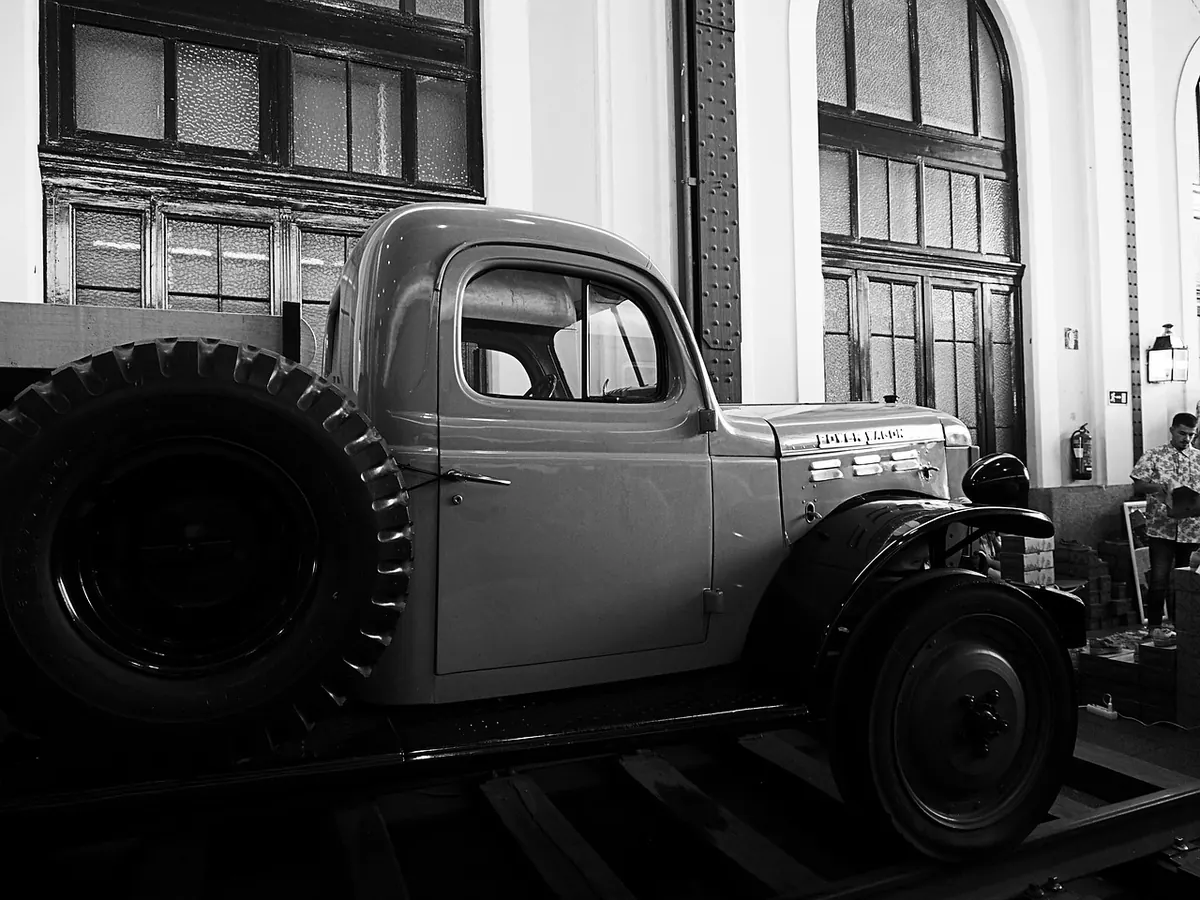
A 1905 Foden steam wagon and a 2024 aero tractor share a steering wheel, a payload and a purpose — and almost nothing else. The boiler went, the diesel arrived, the cab slid forward over the engine, and the whole shape learned to slip through air. What makes the timeline worth following is why each change stuck: a law, a road surface, a fuel price or a driver's sore back, rarely a designer's wish to look modern.
Steam Wagons Set the Pattern
Britain's steam wagons — Foden, Sentinel, Garrett, Aveling & Porter — did the heavy hauling of the early twentieth century. The layout looks odd now: vertical boiler, coal bunker, chain final drive, solid rubber tyres, barely any glazing. Two men were needed, and the fireman had to keep steam up at every stop and on every climb.
Speed limits were slow enough that the missing brakes and suspension mattered less than you would expect. What survived into later designs was the basic heavy-lorry recipe: a separate chassis, a live rear axle, and the load carried behind the driver.
Solid Rubber, Pneumatic Tyres and Real Brakes
Solid rubber tyres stayed on heavy goods vehicles for decades. They were long-wearing and unforgiving, and they punished both road and spine. Pneumatics reached cars and light commercials early, but many heavy fleets kept solids into the 1930s. The switch mattered: air cushions the load and the chassis, improves grip, and makes a laden lorry far less destructive to the road surface.
Braking followed a similar path. Westinghouse's air brake began life on railways in the nineteenth century, and adapting it to road vehicles gave heavy lorries a way of stopping that did not rely on the driver's leg alone. Power steering reached heavy lorries only in the 1960s.
Diesel Changes the Economics
Rudolf Diesel's engine dates from the 1890s. Getting it into a road vehicle took another quarter of a century, and in the early 1920s German makers including Benz, MAN and Daimler demonstrated diesel lorries. The appeal was plain: strong torque low in the rev range, less fuel burned per tonne carried, and no boiler to light at four in the morning.
British operators came round once the engines proved reliable. AEC, Leyland and Gardner were among the makers whose diesels fleets trusted, and by the 1930s diesel was the obvious choice for long-distance work. Petrol lorries survived into the 1950s on short delivery rounds, where a lighter engine and a lower purchase price still made sense.
The Fifth Wheel and the Articulated Semi
Before the artic, the standard heavy combination in Britain was a rigid lorry pulling a drawbar trailer, and reversing one is a skill learned slowly. The semi-trailer changed the geometry: the front of the trailer rests on the tractor unit's fifth wheel coupling, so part of the load sits on the towing vehicle and the trailer pivots over the drive axle rather than swinging behind a drawbar.
August Fruehauf is widely credited with building a practical semi-trailer in the United States around 1914. The idea spread because it solved several problems at once:
- Better weight distribution, so more payload inside the same gross weight.
- A shorter combination for the same load, which mattered as length rules tightened.
- Easier reversing than a drawbar outfit.
- Trailer swapping: one tractor unit can serve several trailers, so the costly part of the fleet keeps earning while a trailer is loaded.
That last advantage is why artics dominate long-haul work, and why the fifth wheel is one of the few ideas from the 1910s that nobody has seriously replaced.
Cab-Over Versus Conventional: A Tape Measure at Work
The cab-over-engine lorry puts the driver above or beside the engine, inside the same length as a short bonnet. Europe went that way because length limits counted the whole combination, streets were narrow and turning circles mattered. In North America, length rules often measured the trailer rather than the complete unit, which left room for the bonneted conventional lorry with its long nose and big sleeper.
Early cab-over cabs were hot, noisy and miserable to service, with the engine reached through a hatch. The tilt cab — hinged at the front so the whole cab leans forward — was the answer, and it was common across European ranges by the 1960s.
Comfort, Turbocharging and the Long-Haul Cab
Once drivers were sleeping in the vehicle, cab design stopped being only about the engine. Sleeper bunks, heating, insulation, better seats and cab suspension arrived through the middle decades of the century, and each one changed what a haulier could ask of a driver.
Engines moved too. Turbocharging, already proven on industrial and marine diesels, reached road lorries in the 1950s and 1960s, with intercooling following. More power from a smaller engine allowed gearing, axle ratings and cab layout to be rethought. Automated manual transmissions from the 1980s onward took some of the grind out of city traffic and long climbs.
Aerodynamics and the Modern Tractor
The fuel crises of the 1970s did what comfort never could: they made hauliers care about air. A box-shaped tractor pulling a box-shaped trailer at motorway speed spends real fuel pushing air out of the way, and wind tunnel work plus fleet fuel records turned deflectors into standard equipment.
- Roof fairings and cab-roof extenders to smooth the step up to the trailer.
- Side skirts, side extenders and gap seals to close the space between tractor and trailer.
- Rounded corners, sloped windscreens and better-integrated mirrors.
- Cooling details such as fan clutches and radiator shutters.
Modern tractors carry the idea further with automated gearboxes, telematics that coach drivers on fuel use, adaptive cruise control and emission control. Exhaust gas recirculation and selective catalytic reduction with AdBlue arrived in the 2000s to meet tightening nitrogen oxide limits, while particulate filters dealt with soot. Electric and gas lorries now appear on routes where a depot charger or a fixed refuelling point makes sense.
Reading the Timeline at a Show
An hour in a rally field teaches more than a week of reading. At a vintage commercial vehicle show, walk the line and check four things: tyre type, cab position, wheelbase and brake system. They will tell you roughly when a lorry was designed, and usually why.
- Look at the wheels — solid rubber, spokes or wide singles?
- Look at the cab — over the engine, behind a bonnet, or tilting?
- Look at the coupling — drawbar, fifth wheel, or a fixed body?
- Read the display board — chassis number, engine make and original operator usually fill in the rest.
If you are thinking of buying a project rather than admiring one, talk to the marque club first; parts availability decides whether a restoration takes two years or ten. Before you commit, check the licensing, plating and road tax rules for the weight you intend to run with the relevant authority, because the rules for historic heavy vehicles are specific and they do change.